Norms and standards
Standards are where bitmark's structure pays most. Every provision, note, example, figure, formula and table is a bit of its own type, normative or not, with the ID the standards body gave it.
Provisions as bits
[.smart-standard-article-normative]
[@customerId: cl_411_3_2 ]
[%411.3.2]
The protective device shall disconnect the supply within the time given in Table 41.1.

[.smart-standard-note-non-normative]
[%NOTE]
Shorter times may apply to final circuits.
The smart-standard bits come in normative and non-normative kinds: articles, notes, examples, figures, formulas, definition lists, lists, legends and bibliography entries, several of them also collapsible. The reference lists them all under the smart standards group.
From the standards body's XML
Standards are produced in XML, often NISO STS. The parser imports it directly and keeps every ID and cross-reference of the original on the customer side; see The Rosetta Map.
National deviations and training layers
A national committee's deviations, or a training layer with explanations and videos, sit on top of the international text as a diff book: the original stays untouched, and each change names the provision it changes; see Alias and diff books.
Where bitmark sits on the SMART levels
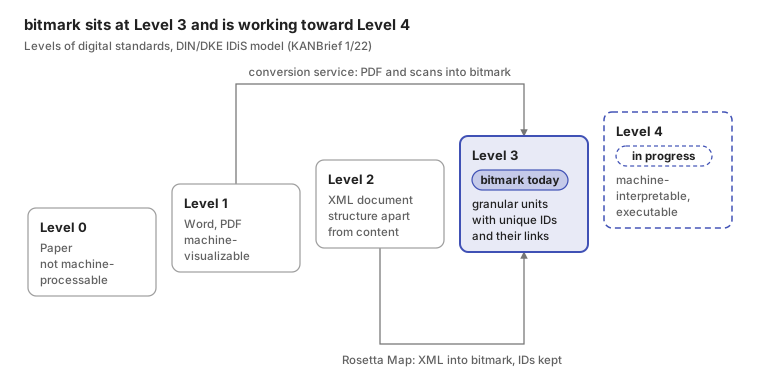
The levels of digital standards come from the DIN/DKE IDiS model, as published in KANBrief 1/22. bitmark meets Level 3 as KAN defines it: granular units, uniquely identified, with their relationships recorded. Level 4, content that machines can execute directly, is the work of the association's Level 4 working group.